
Why Good AI Models Suddenly Feel Dumb
Every time a new flagship model drops, I switch to it within a day. A week later, using the previous model feels like talking to a brick wall.
It is easy to assume the older model was never actually good. But something happened this week that made me realize the problem is mostly me.
Three Days on Flash
I hit my Codex limit earlier this week and had three days before the reset. I was in the middle of writing code and did not want to stop, so I forced myself to work with Gemini 3.7 Flash.
The first hour was terrible. Flash missed context, gave half-baked answers, and made assumptions I did not ask for. My immediate thought was that the model was simply too weak for serious architecture work.
Because I was locked out of my main model, I had to make it work.
I changed how I worked with it. I stopped pasting raw paragraphs of unorganized thoughts. I broke features down into concrete requirements, asked for one step at a time, and when the session got messy or the model started repeating itself, I opened a new chat for a clean slate.
After a few tasks, it clicked. For three days, I shipped real code and built entire architectural components with Flash. It was fast, reliable, and produced solid results. I walked away convinced that smaller models get an unfair reputation, and that they work well once you learn their quirks.
The Reset
Then my quota reset.
I went straight back to the flagship model. The friction disappeared immediately. I could be lazy again. I gave vague prompts, skipped details, and the model still guessed what I wanted.
A few hours later, I wanted to run a quick, small script change, so I tossed the prompt to Flash.
It failed completely. It gave me a broken answer on the second turn. It felt like a different, significantly dumber model than the one I had just spent three days shipping code with. Within two minutes, I gave up and ran the small script through the expensive model instead.
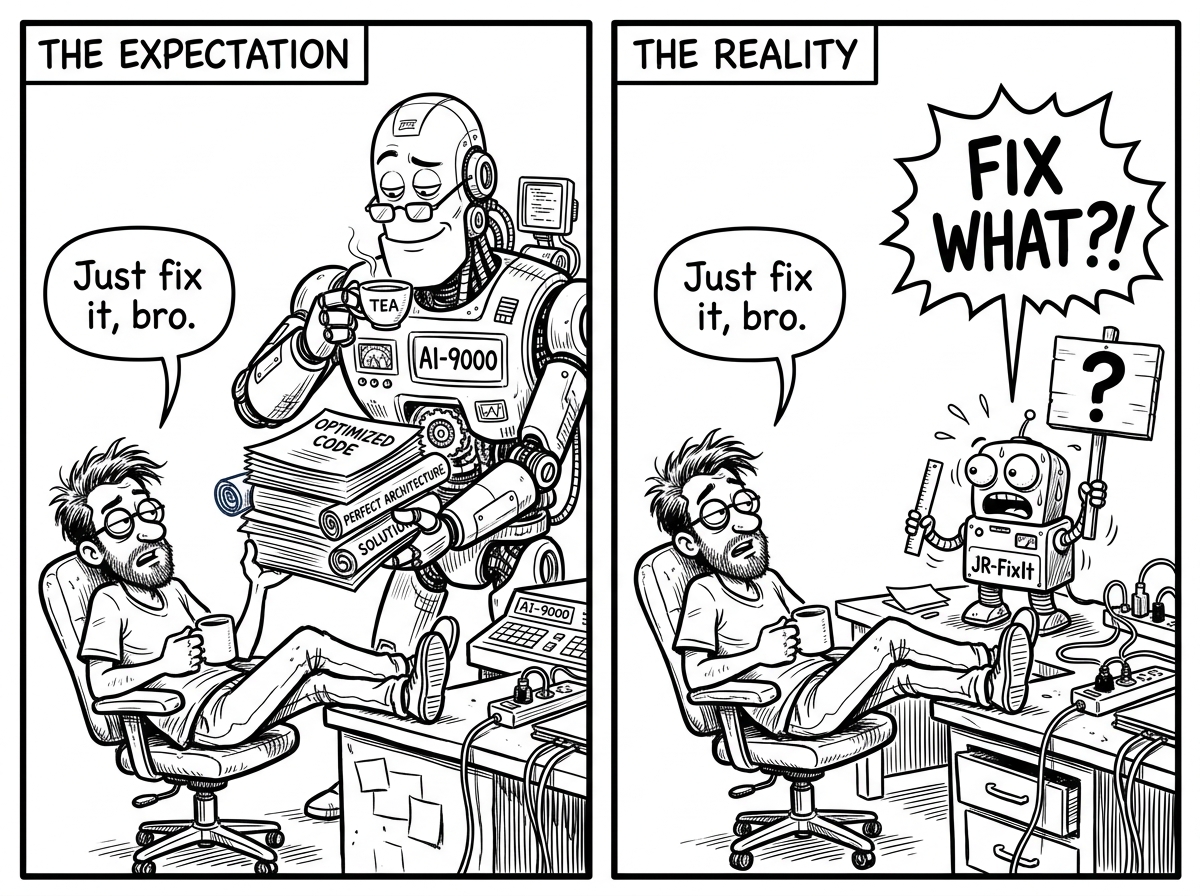
Flash did not get worse during my lunch break. My prompts did.
Frontier Models Ruin Your Habits
Frontier models tolerate bad communication. When a model has enough reasoning capacity, it fills in your blanks. It sorts through a messy context, figures out what you probably meant, and ignores minor contradictions.
Smaller models cannot do that. They need clear instructions, defined boundaries, and clean contexts. When you adjust to them, you write better specifications and get great output.
The problem is how fast those good habits disappear. Five minutes after switching back to a top-tier model, you go back to typing sloppy stream-of-consciousness prompts. When you feed those same sloppy prompts back to a smaller model, it falls apart.
The model did not suddenly become stupid. You just stopped giving it what it needs to work.